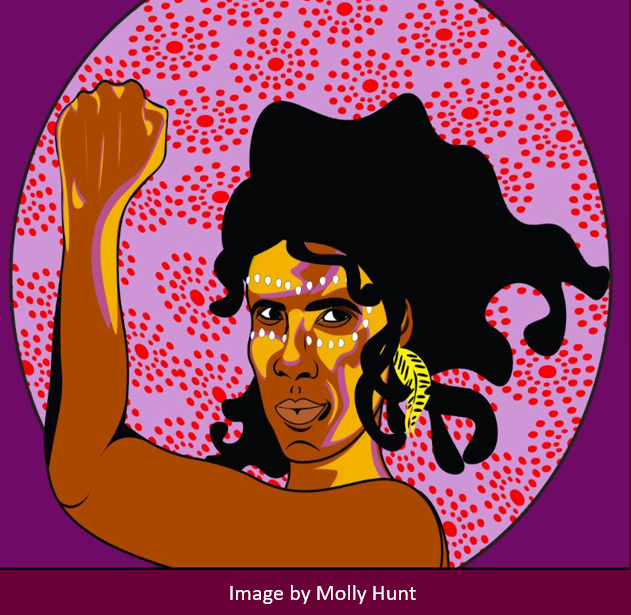
Equity and inclusion are now central organising principles of public institutions, particularly within the Australian public sector. Yet for many Aboriginal women working within these systems, visibility does not translate into safety, authority, or transformation. Performing Equity, Preserving Power: The Double Bind for Aboriginal Australian Women in Public Sector Workplaces, co‑authored with Bronwyn Carlson and published in the SAGE-Journal of Sociology (Bargallie & Carlson, 2025), interrogates this contradiction and asks what equity is actually doing inside contemporary institutions.
The paper examines how equity regimes function less as pathways to justice and more as technologies of governance. Drawing on the Aboriginal‑led Make Us Count study and yarning interviews with 25 Aboriginal women employed in the Victorian Public Sector, the article identifies a persistent double bind: Aboriginal women are hypervisible as symbols of diversity and reconciliation, yet structurally excluded from leadership, decision‑making, and institutional protection.
We show how Aboriginal women are routinely expected to perform extensive cultural, emotional, and relational labour—supporting reconciliation agendas, mentoring colleagues, managing racism, and stabilising institutions—while this labour remains largely invisible, unrewarded, and unsupported. At the same time, formal complaints and accountability systems frequently fail them, recoding structural racism as interpersonal conflict and positioning Aboriginal women who speak out as risky, unprofessional, or disruptive.
Bringing Critical Race Theory and Critical Indigenous Studies into theoretical conversation and drawing on Aileen Moreton‑Robinson’s theorisation of the white possessive, the paper argues that equity is not simply failing through poor implementation. Rather, equity—as it is currently enacted—often works precisely as designed: incorporating Indigenous presence while preserving institutional power and settler‑colonial authority.
Rather than asking how inclusion can be improved, the article shifts the question more fundamentally: can inclusion, on its current terms, ever deliver justice? By centring Aboriginal women’s narratives as theory rather than “experience” alone, the paper contributes to critical debates on race, gender, settler colonialism, institutional whiteness, and Indigenous refusal.
Access the full paper here: Performing Equity, Preserving Power: The Double Bind for Aboriginal Australian Women in Public Sector Workplaces – Debbie Bargallie, Bronwyn Carlson, 2025