Griffith University colleagues, Troy Meston, Halim Rane and me published an article for the Melbourne Asia Review. We write:
Australia implemented unprecedented counter-terrorism measures of mass monitoring and preventative pre-crime offences following the hyper-securitisation of young Muslims after the events of 9/11. This was part of a broader turn in the West towards ‘militant democratic’ responses to violent Islamist extremism. Evaluations of the Australian response found it to be ineffective and counter-productive, effectively stigmatising Muslims as terrorist-producing communities.
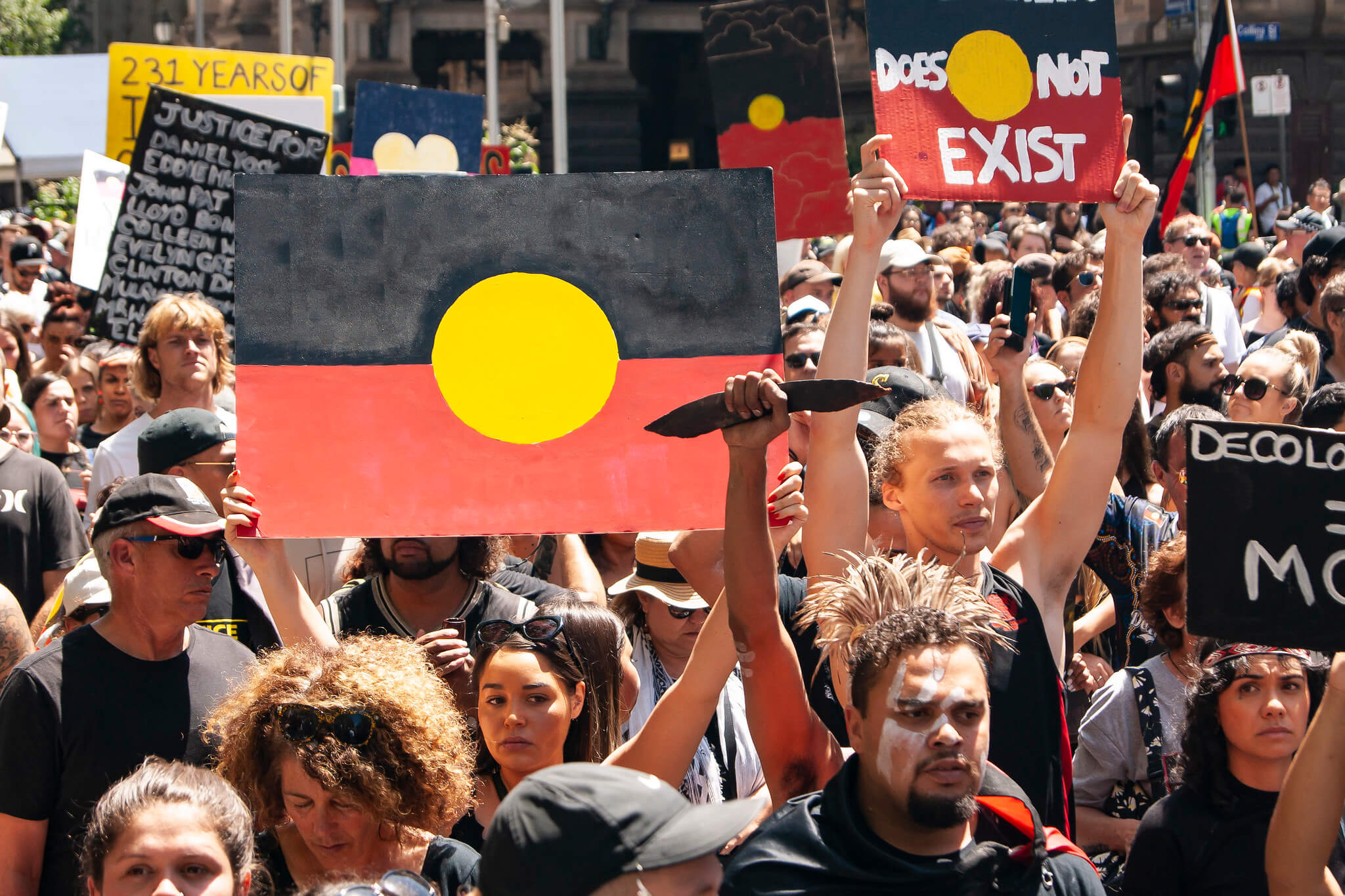
Nationalistic anxieties, perceptions of threat, and extreme measures of reactionary law and order in Australia, however, are not recent turns. Scholar Ghassan Hage makes clear that nationalistic anxiety and ‘extreme’ measures of law and order are symbiotic to enduring White nation fantasies of Australia and its paranoid obsession with border politics. He argues that Australia is ‘structured around a White culture, where Aboriginal people and non-white “ethnics” are merely national objects to be moved or removed according to a White national will’. Through these lenses, the reproduction of threat and extreme policing powers is ‘old wine in new bottles’. Indigenous Australians, Muslim and ‘other others’ have all been constructed, at different times and in different ways, as threats to the established political stability of national identity and the nation.
We historicise militant democracy in the Australian context through a lens offered by the threat of Indigenous and Muslim peoples prior to 9/11. The concept of militant democracy centres on the notion that democracy is not only a political system but also a set of fundamental values that must be safeguarded. When applied, militant democracy intentionally restricts ‘certain democratic freedoms’ of so-named ‘malicious’ groups. The intent of militant democratic approaches is to defend public order and suppress violent extremism, by leveraging an array of legal, political, judicial, and para-military strategies, such as the use of force and surveillance. Scholar David Tittensor and colleagues’ foregrounding of post-9/11 militant democratic techniques helps us to understand contemporary Muslim-Australian political relations.
This present militant democracy does not exist in isolation—it has a long history in Australia. The policing of perceived ‘radical Islam’ extends a long held ‘colonial paranoia’. That is the idea of the perceived threat of ‘other’ bodies that threatens the White Australian national imaginary.
Read our article here: https://melbourneasiareview.edu.au/indigenous-and-muslim-peoples-in-australia-enduring-threats-to-the-national-identity-and-nation/